Anita Earls against the world
The NC Supreme Court justice could be on the shortlist for the US Supreme Court someday. But first, she faces a right-wing smear campaign and a fight with cancer.

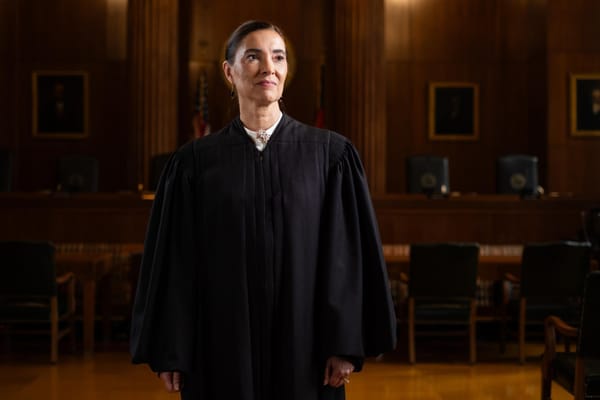
Anita Earls is considered one of the most important modern civil rights attorneys in the South. It's not hard to imagine a liberal president putting her on the shortlist for the US Supreme Court someday.
You would think she'd be more cocky about it.
 Billy Ball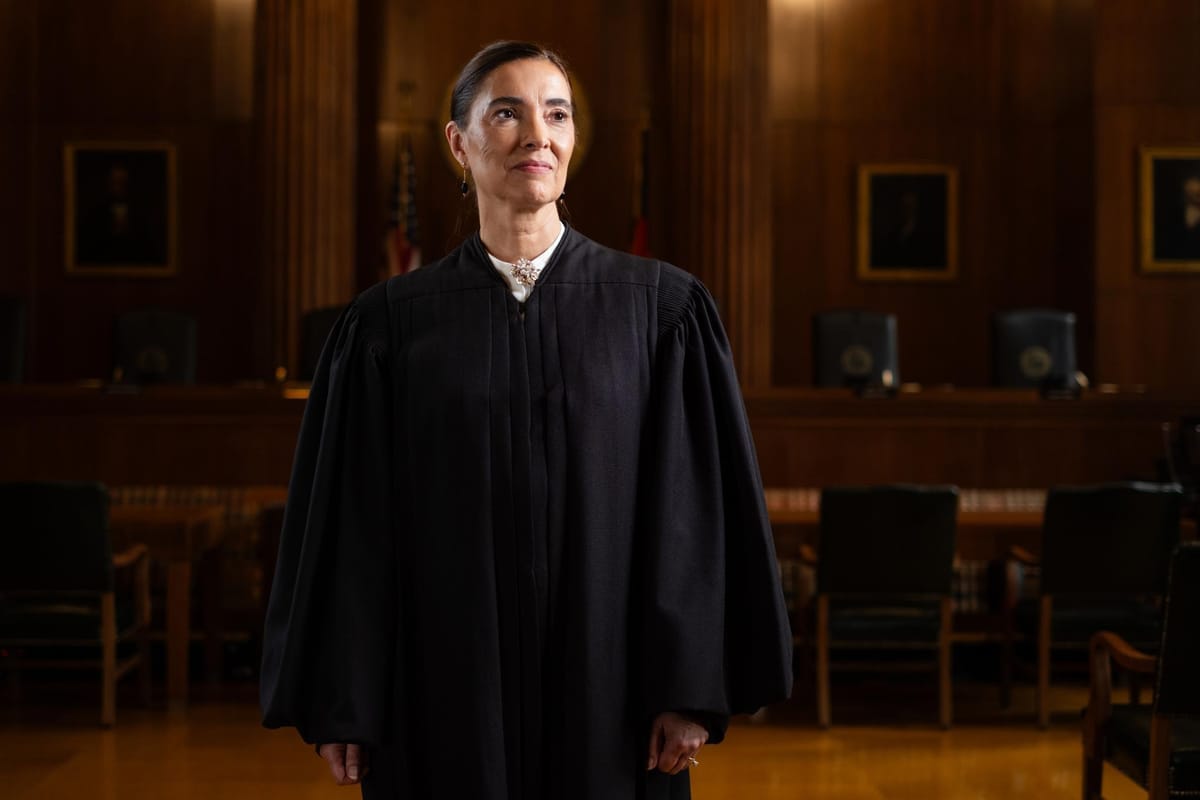
Before we start filming, the incumbent North Carolina Supreme Court justice—who's running for re-election this year—worries that her voice is shot. She's been talking a lot so she's hoarse. That's because, for Democrats, her re-election is probably their most important race this year. Big questions about gerrymandering, voting rights, abortion rights, and public education are up in the air.
She says that all this—the campaigning, the interviews, the TV ads—isn't really her thing.
"My career was about telling other people's stories," she says. "So telling my own story is not easy or doesn't come naturally. But if it can be useful and help in this broader enterprise of improving our justice system than I am willing to do what it takes."
False modesty tends to stick out with some candidates. It doesn't with Earls. Anita Earls is who she is.
In a profile last year, friends and colleagues described the Supreme Court justice as "painfully shy." “She’s not someone that seeks the spotlight," state Rep. Marcia Morey, a former district court judge, told The Assembly. "But she is driven by her passion for justice."
She'll need every ounce of that passion in the days to come.
The stakes are enormous for Earls' re-election. Her win could pave a path for drastic change in the Tar Heel State, a moderate Southern state that's been dominated by by the right since 2010—thanks to arguably the most gerrymandered voting maps in America. Some have questioned, without hyperbole, whether a state this gerrymandered can be called a democracy anymore.
The state's high court has the power to do something about it.
This is not a paywall. To keep reading this story, sign up. It's 100% free.