Trump drops MLK Day celebration at National Parks
Make no mistake, racists cheer decisions like the Trump administration's MLK Day change at the National Park Service.
The Living South was created by journalist Billy Ball in 2025. Every Tuesday, I write about the most interesting stories, people, and thoughts in the American South. Sign up here for free. Want to reprint something from The Living South? Write me. If you like The Living South, share it with your friends. That's how we grow.
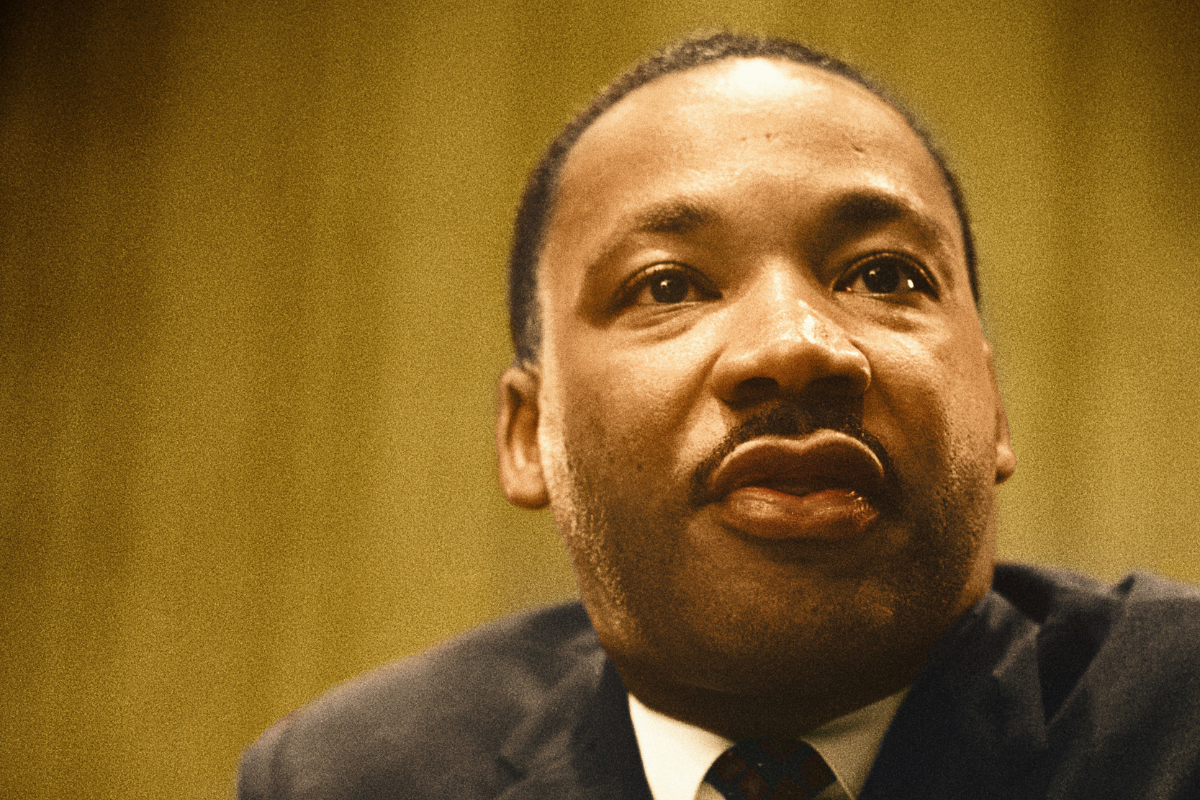
Martin Luther King Jr. is the most important Southerner of the 20th century.
I used to think it was trite and boring to say something like that. After all, who was left to argue about King's greatness?
Growing up in the 1980s and 1990s in the South, King's legacy felt secure. Saying King was good was like debating the goodness of not littering or eating fruits and vegetables. Sure, there were people who doubted King, but they were outsiders. Political untouchables.
In 2025, such people are in the highest offices of the United States. And they are very active. They are testing what we'll put up with. We must not be found wanting.
This month, the Trump administration dropped several days from the National Park Service's list of fee-free days. Among them was Martin Luther King Jr. Day and Juneteenth.
Don't dismiss it as an administrative curiosity. It is intentional, part of an easily traceable pattern in the Trump administration.
MLK Day is well-known to most. The latter—which commemorates the day that emancipation was announced to the last slaveholding state in 1865—has been celebrated by the Black community for generations, but didn't become a federal holiday until 2021.
Both are out. Flag Day, which is also President Trump's birthday, will be a new free day in the national parks.
Anyone who thinks these things are insignificant or incidental is sleepwalking. Keep reading to find out why.
'The good guys' don't always win
In his 2016 book "Stamped From the Beginning," the historian and social critic Ibram X. Kendi challenged the 20th-century notion—one held especially by white liberals—that the story of civil rights is one long, slow road to justice.
In his review of American history, Kendi found not one straight line, but an ongoing marshaling of two opposing forces—one for, one against, racism. When one pushes, the other pushes back harder.
To Kendi, racism's defeat isn't a certainty. "The good guys" don't always win. Many folks would say the forces against racism are losing right now. Badly.
 Billy Ball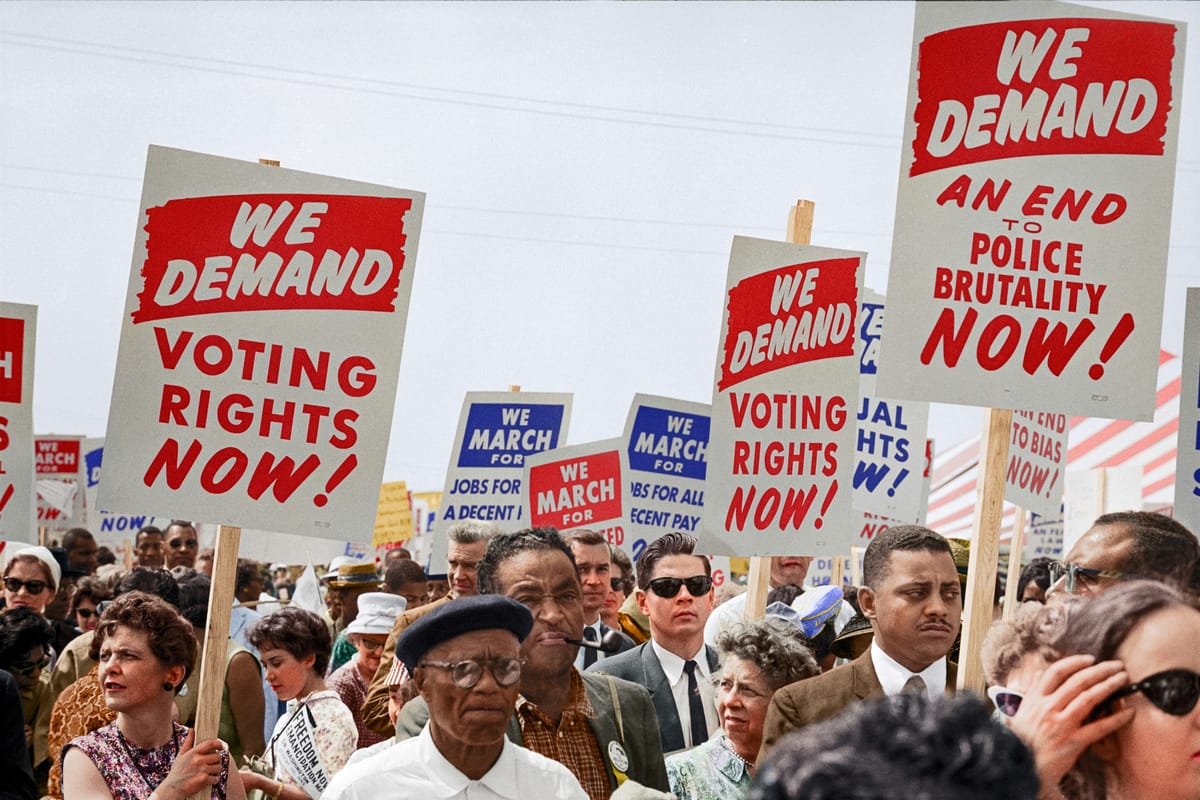
If that's true, what's happening right now at the National Park Service is just one small battle on one front in one long war against racism.
But make no mistake, racists cheer decisions like this. They are inspired, lifted.
Such people, even if they were quieter about it, have never admired King, who wasn't just an advocate for peace and love, as some of those "Santa Claus-ifying" him have reduced him to—but a spirited, tenacious intellectual.
King, a preacher's son from Atlanta, disrupted unjust systems, called out the timid white liberal, prioritized voting rights, and challenged Black and white leaders alike to be bolder. He advocated fiercely for the working class, condemned war, and called out our indifference to poverty.
He argued that it wasn't enough to support civil rights in theory. You had to etch it in stone, with things like the Civil Rights Act of 1964 and the Voting Rights Act of 1965, two of the most consequential achievements of his lifetime.
And when he was murdered in April 1968, King was deeply unpopular in America—partially because of his opposition to the Vietnam War and partially because some white people, even white moderates and liberals, had grown weary of protest.
Trump and race
King's reduction is a victory for racists.
The Trump administration's choice at the National Park Service fits a pattern too. In public, the president honors King and other civil rights icons because he has to. In actual practice and policy, he's undermined King's legacy many times over.
Indeed, Trump's rise as a legitimate political candidate was fueled, in part, by white anger about the election of former President Obama and racial justice advocacy in America.
Sometimes Trump's views on race show themselves in pedantic, sneaky ways, like this fall when the US Coast Guard—which is part of Trump's executive branch—briefly reclassified symbols like a swastika or a noose not as hate symbols, but as "potentially divisive." Coast Guard leaders walked it back after a public outcry.
In 2019, the first Trump administration quietly shelved a plan to put legendary abolitionist Harriet Tubman on the $20 bill. She would have replaced former President Andrew Jackson, whose legacy could be described as "complicated" if we were being kind.
Other times, Trump's apparent views on race and those of the people around him emerge in big, broad policies, like his ongoing advocacy for an immigration system that rejects people from poor and non-white countries, which he's referred to as "shithole" countries.
The president and his allies routinely uplift one of the oldest myths of hate groups like the Ku Klux Klan and the Proud Boys—that white people are being systematically replaced by people of color.
And though he's referred to himself as "the least racist person," Trump's real estate companies have a well-documented history of discrimination against potential Black renters.
“You know, you don’t want to live with them either," he reportedly told one Justice Department attorney during the depositions for the federal government's 1973 case against Trump's real estate company.
Since the 1990s, Trump's repeatedly called for the execution of four Black teens and one Latino teen falsely accused of raping a woman in New York's infamous "Central Park Five" case. He continued his advocacy as recently as his 2016 campaign for president, even though a serial rapist confessed to the crime in 2002 and DNA evidence confirmed it.
Perhaps most significantly, the people Trump's picked to sit on the US Supreme Court are poised to end the Voting Rights Act's protections against partisan manipulations of Black voting districts, a move that puts Black political power in the South in critical jeopardy.
A full accounting of Trump's most troubling statements and actions as it relates to race cannot be fit in one story. It could fill volumes.
The point, however, is to say that the Trump administration's decision at the National Park Service is not an outlier. It is a warning of where we are and where we're going.
The inevitability of goodness is a very American sentiment. It can be a blessing to feel that, but it is a blindfold too.
For a lot of folks in America right now, the blindfold needs to come off.
The Living South was created by journalist Billy Ball in 2025. Every Tuesday, I write about the most interesting stories, people, and thoughts in the American South. Sign up here for free. Want to reprint something from The Living South? Write me. If you like The Living South, share it with your friends. That's how we grow.
 Billy Ball