The South needs a new Civil Rights Movement
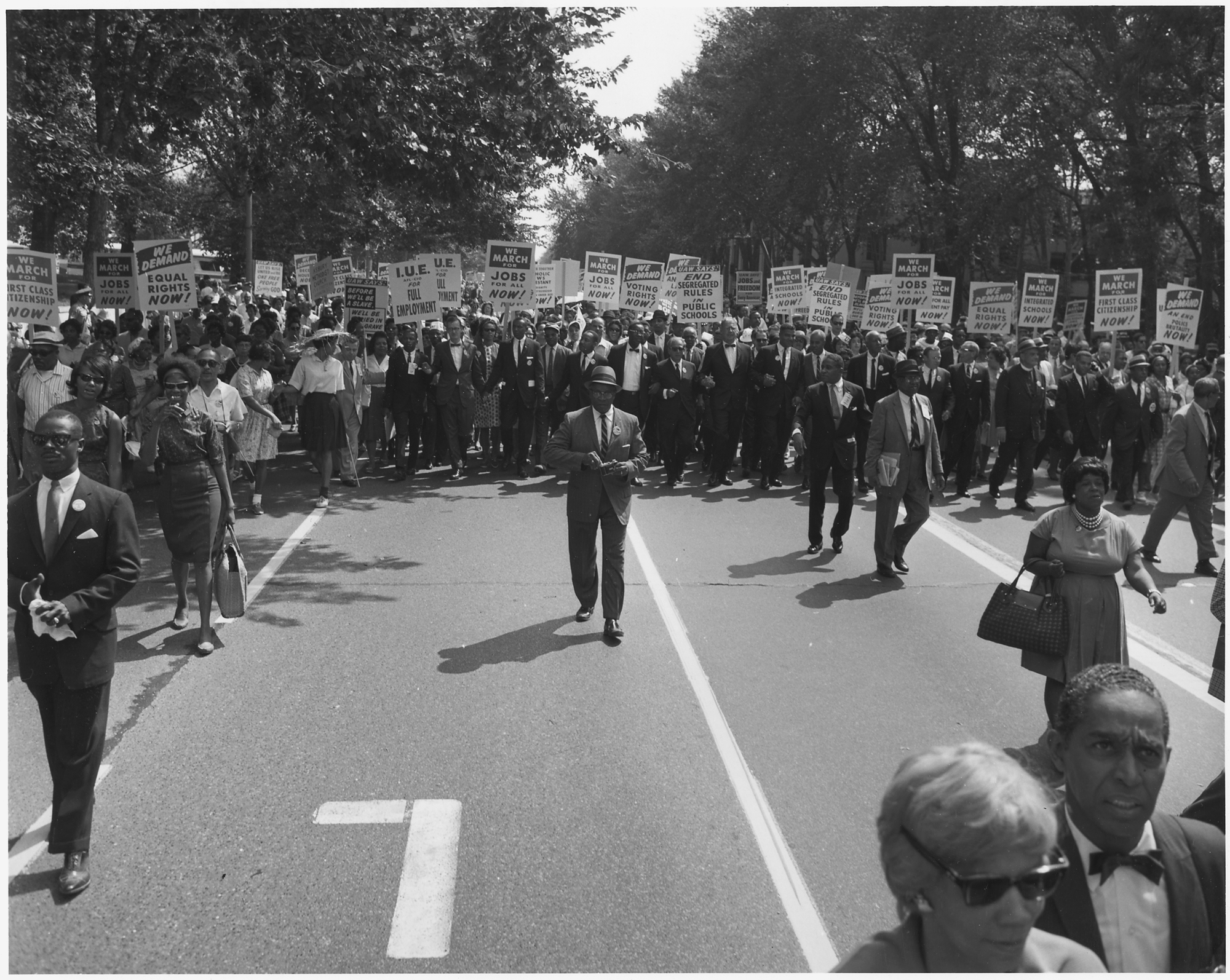
The Civil Rights Movement was a product of necessity. The American system could no longer withstand its own flaws, particularly in the South. In 2026, we've come to the same impasse.

When Mississippi Gov. Tate Reeves promised recently to stop the man who’s “reigning terror” in his state, he wasn’t talking about a terrorist or a wanted criminal.
He was referring to US Rep. Bennie Thompson, who for the last 33 years has represented Mississippi's only majority Black voting district in Congress.
Thompson’s time in Congress is, like any politician with that kind of shelf life, full of twists and turns. His record is not particularly remarkable though, outside of chairing the House committee that investigated the January 6th insurrection at the Capitol.
But like many of the “Jim Crow” politicians who dominated the South for generations, Reeves makes Black leaders like Thompson seem like a threat.
Reeves promised that his party’s plans to gerrymander Mississippi will “save” this Deep South state. They’ll do that by spreading the Black voters of Mississippi House District 2 into other whiter districts and diminishing their political pull, what little they had anyway.
“It’s not a question of if. It’s a question of when,” Reeves said.