Anita Earls against the world
The NC Supreme Court justice could be on the shortlist for the US Supreme Court someday. But first, she faces a right-wing smear campaign and a fight with cancer.

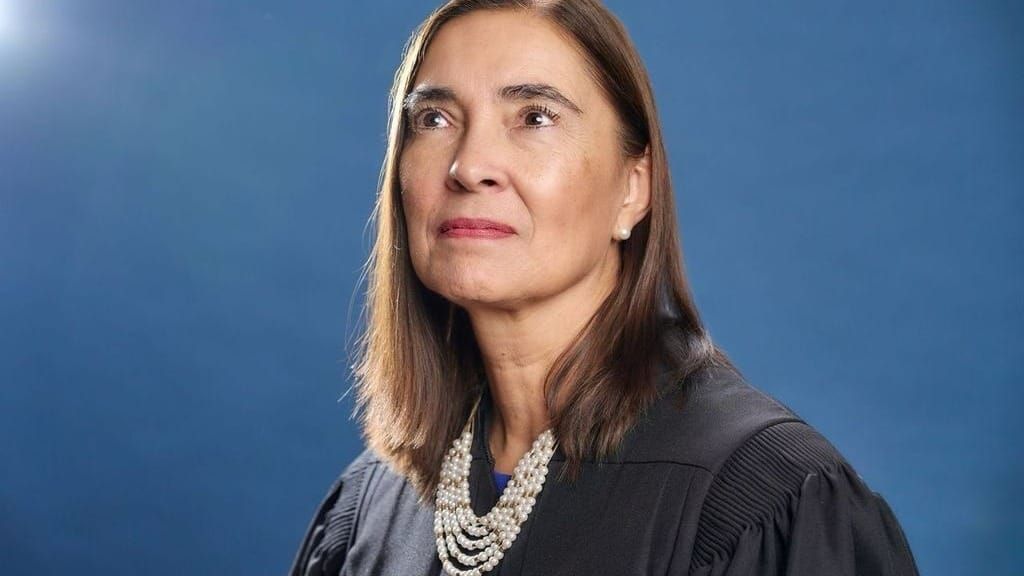
Anita Earls is considered one of the most important modern civil rights attorneys in the South. It's not hard to imagine a liberal president putting her on the shortlist for the US Supreme Court someday.
You would think she'd be more cocky about it.
 Billy Ball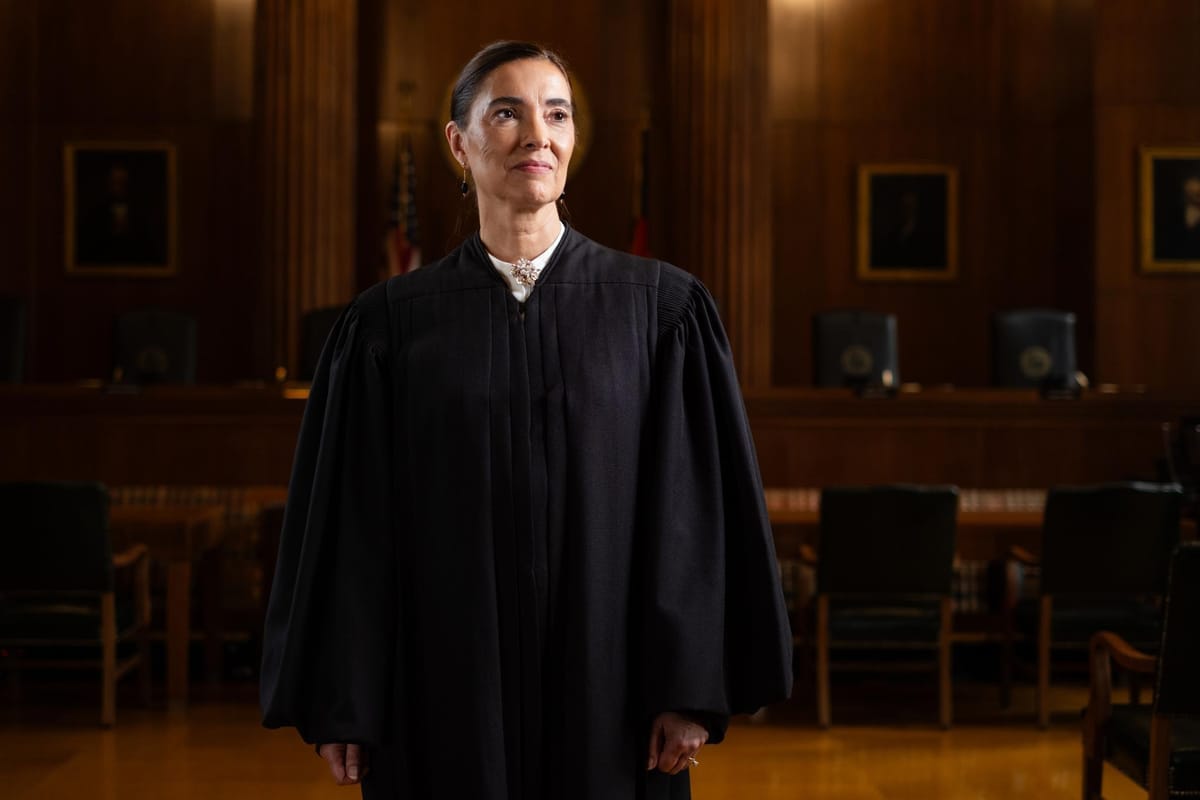
Before we start filming, the incumbent North Carolina Supreme Court justice—who's running for re-election this year—worries that her voice is shot. She's been talking a lot so she's hoarse. That's because, for Democrats, her re-election is probably their most important race this year. Big questions about gerrymandering, voting rights, abortion rights, and public education are up in the air.
She says that all this—the campaigning, the interviews, the TV ads—isn't really her thing.
"My career was about telling other people's stories," she says. "So telling my own story is not easy or doesn't come naturally. But if it can be useful and help in this broader enterprise of improving our justice system than I am willing to do what it takes."
False modesty tends to stick out with some candidates. It doesn't with Earls. Anita Earls is who she is.
In a profile last year, friends and colleagues described the Supreme Court justice as "painfully shy." “She’s not someone that seeks the spotlight," state Rep. Marcia Morey, a former district court judge, told The Assembly. "But she is driven by her passion for justice."
She'll need every ounce of that passion in the days to come.
The stakes are enormous for Earls' re-election. Her win could pave a path for drastic change in the Tar Heel State, a moderate Southern state that's been dominated by by the right since 2010—thanks to arguably the most gerrymandered voting maps in America. Some have questioned, without hyperbole, whether a state this gerrymandered can be called a democracy anymore.
The state's high court has the power to do something about it.
This is not a paywall. To keep reading this story, sign up. It's 100% free.
But North Carolina's judicial system has changed a lot since Earls ran and won in 2018. Excluding Earls' race, Republicans have dominated statewide judicial races since NC legislators moved a decade ago to make court races openly partisan—meaning there's a "D" or an "R" beside the candidates' names.
GOP voters have been more unified behind their candidates. They've been more likely to vote Republican all the way down the ballot too.
So today, the GOP holds a 5-2 majority on the NC Supreme Court, the highest court in the state. Earls is one of two Democrats. Allison Riggs, Earls' former protégé, is the other.
All this to say that the road is very difficult for Democratic candidates for the judiciary right now, and for Earls, it's gotten harder. Two weeks after we spoke in December, Earls announced she was being treated for breast cancer. Her prognosis is positive, she said, because doctors caught the disease early.
"We are not slowing down," she promised her supporters in a video on social media. "We are not losing focus. This is just a bump in the road."
Since she first ran for office in 2018, Earls has been a big target for the right. Because of her work litigating voting rights and other civil rights issues, they've called her an activist. On enormous cases concerning gerrymandering and public education funding, conservative state Supreme Court justices have taken the extraordinarily unusual step of revisiting recent rulings from the previous Democratic-controlled iteration of the court.
When Earls questioned whether the Republican majority on the NC Supreme Court was more concerned with political affiliation and ideology than the law, one GOP justice went so far as to call her dissenting opinion "a bit unhinged."
Republicans even filed a since-dropped ethics complaint against Earls—one of three Black women to ever sit on the NC Supreme Court—for pointing out the court system is dominated by white men, which is sort of like prosecuting a meteorologist for saying it's raining outside.
They call Earls a Democratic activist, but in her re-election campaign this fall, she faces Republican Sarah Stevens, a prominent state lawmaker tied closely to the GOP legislative agenda.
The endgame is 2028, when Democrats might be able to flip the power on the court and finally limit generations of partisan and racial gerrymandering in the state—done by Democrats and Republicans alike. To get there, though, Earls has to win this year.
To protect their control of the NC Supreme Court, Republicans took the unprecedented step of trying to overturn the 2024 election of one Democrat, Supreme Court Justice Allison Riggs, after a narrow victory over Republican Jefferson Griffin.
For six months, the NC GOP lobbied the courts to change the rules for how votes are counted after the election happened. It spurred national media attention and criticism from prominent leaders on the left and the right, but—astonishingly—members of the conservative-dominated state Supreme Court appeared poised to let it happen before a federal judge threw it out.
In 2026, Earls should expect no less from Republicans. The opposition will do anything to beat her. She knows it. These are extraordinary times. The world is coming for Anita Earls. Is she ready?

'No one personality type'
Since she ran for the state Supreme Court in 2018, Earls has told her story a few times. It is a unique one.
Born in 1960, she is the adopted daughter of a Black man and a white woman. The US Supreme Court didn't forbid states from banning interracial marriage until 1967, so Earls' parents moved from Missouri to Washington state so they could be married.
"The laws also impacted where they could work, what educational opportunities we would have as their children, what they would get paid on the job, where we could live," Earls says. "All of those things were impacted by race, and I saw how people could use the legal system to vindicate their rights."
In a 2021 book, Earls told the journalist Billy Corriher that her family helped to integrate an all-white neighborhood in Washington state. Earls came to see the law in a different light. For her family, it was either a kind of protection or a threat. She decided in middle school she wanted to be a part of shaping it and become a lawyer.
 Billy Ball
" I hope for young folks to realize that there's no one personality type," she told The Living South. "I'm not particularly outgoing. I'm not the person that everyone would think 'now there's someone who's gonna be a lawyer,' but I did have the commitment and so I did all the things that I could think of to try to improve those skills."
She joined her school's debate team. She studied. She practiced speaking in front of others. The work paid off.
Earls studied at Williams College, a liberal arts school in Massachusetts, and later at Yale, where she was editor of the Yale Law Journal. After school, she practiced law in Charlotte with Julius Chambers' firm, which made a name for itself in the 1960s and 1970s representing Black folks taking on the system.
It's one thing for courts to say that Black and white kids should go to the same schools, as the US Supreme Court did in 1954. It's another to actually make them go to the same schools, working around the local ordinances, red-lined housing patterns, and the predominantly white Christian schools that sprang up across the South to defy integration.
Chambers' firm—which he founded with Adam Stein, the father of North Carolina Gov. Josh Stein—helped to figure that out for a time. In the legal community, Chambers is a legend, and Earls—the founder of the Southern Coalition for Social Justice (SCSJ)—is as close to an heir apparent as you will find today.
As an attorney, she's litigated school desegregation, voting rights, employment and housing discrimination, and more. She's worked for former President Clinton's Justice Department and the Lawyers' Committee for Civil Rights Under Law. And in 2007, she founded the SCSJ, a team of lawyers, researchers, and organizers who battle structural racism in the South.
Earls has argued cases as high as the US Supreme Court, fighting gerrymandered maps in North Carolina, and laws that explicitly targeted Black voters.
"Our legal system works best when everyone has some representation," she told The Living South. "(When) they have access to learn what their legal rights are."
Earls partially attributes her founding of the SCSJ to tragedy. In 2006, her brother was stabbed to death by a woman he had a relationship with. Prosecutors declined to press charges against the woman, who told police she was defending herself, although the woman acknowledged that she lied to police at one point during the investigation.
Earls' brother was Black. The woman was white. There were questions about prosecuting a white woman for killing a Black man in a white-dominated community.
"I especially get outraged when people say that I'm soft on crime because I know that I am not soft on crime," she says. "I understand exactly what it means when when someone is the victim of a violent crime in particular and there's no justice brought for that."
'I cannot be silent'
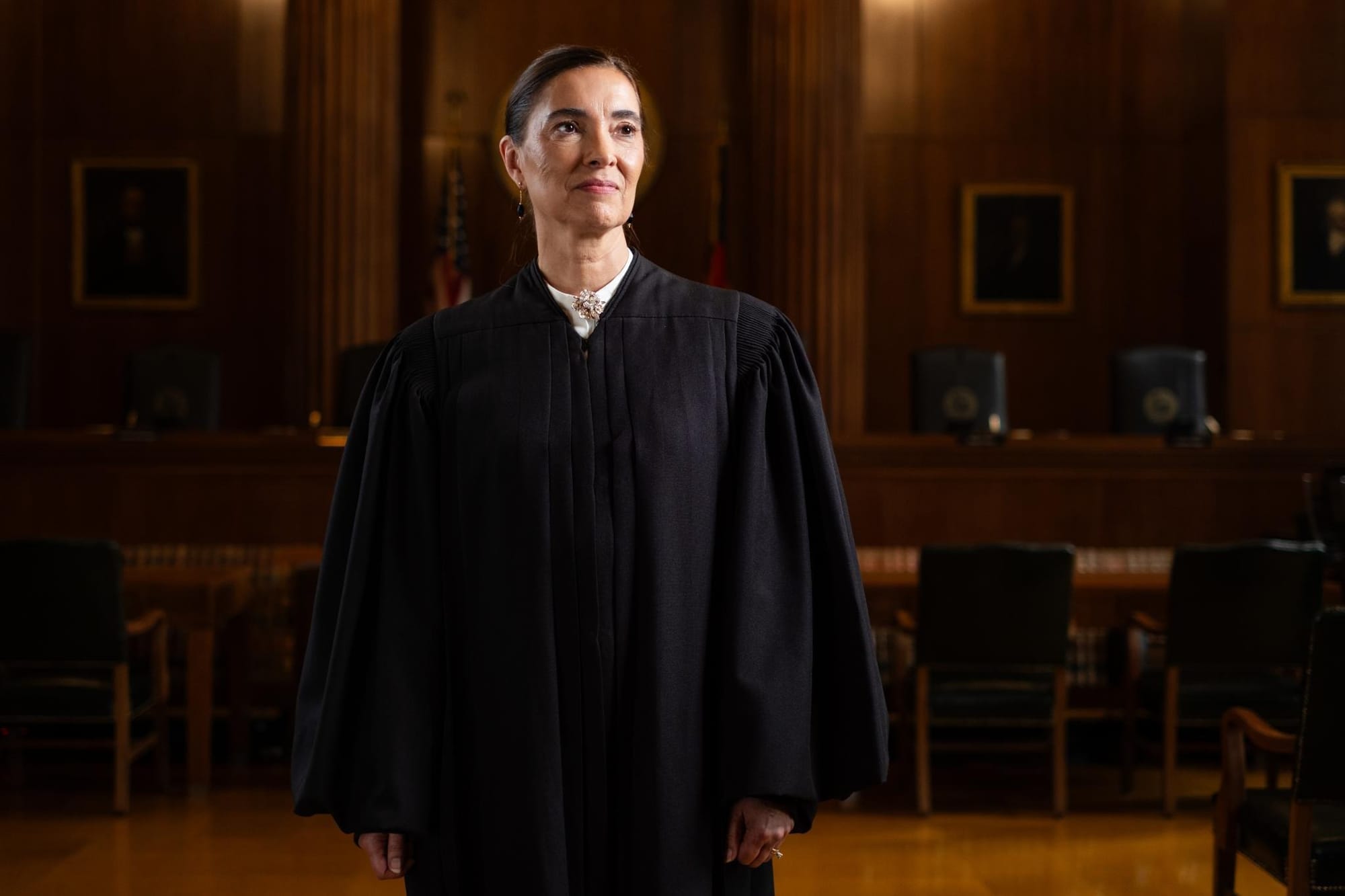
Anita Earls knows her political opponents are out to get her. But in November, Earls did something she's never done before as a sitting Supreme Court justice. She spoke directly about something happening in the news.
In mid-November, agents with the US Border Patrol and Immigrations and Customs Enforcement (ICE) began a high-profile crackdown in Charlotte and other North Carolina cities. Social media was filled with videos of armed, masked men in action. It's one thing to see them on TV. It's another to see them in front of your local hardware store.
In numerous clips, immigration agents appeared to question and arrest Brown-skinned people who happened to walk by. In the parking lot of a Charlotte Home Depot, after a US citizen honked his horn to warn others of immigration agents, Border Patrol broke the windows out of his truck and threw him to the ground.
In the Triangle, agents handcuffed a construction worker, who was also an American citizen, and drove him a couple miles away before dropping him on the roadside. Before driving away, immigration agents tossed his wallet and possessions on the ground. "Chinga su puta madre"—"fuck your fucking mother"—he shouted at the caravan of SUVs as it pulled away.
On Nov. 19, several days after Border Patrol arrived in Charlotte, Earls put out a statement on social media. "I cannot be silent while the constitutional rights of our neighbors are being violated right here in North Carolina," she said.
The raids were making the public less safe, Earls said. "The willingness of this administration to abandon the prosecution of serious crimes simply in service of political theater and to scapegoat immigrants is appalling," she added.
Predictably, conservatives chastised her. "Expressing an opinion in opposition to the legal enforcement of the law is an interesting position to take," one commenter on Facebook wrote of Earls' statement. "I appreciate you making it part of the public record."
When I spoke with Earls about speaking out, she bristled about the reaction to it.
"I get frustrated," she said. "Because I feel like no one is engaging with me about what I actually said. Immediately the attack is 'should I have said it?' And so I have to spend a whole bunch of time talking about whether or not I should say it and obscuring was I right? Do you think I was right?"
As the only woman of color on the state Supreme Court, Earls says she has a unique perspective. "When I go to Florida, people speak Spanish to me all the time because they think I look Hispanic. I don't think I should be stopped by ICE because I look Hispanic."
Earls says it shouldn't be controversial for a judge to point out that, based on media reports of ICE and Border Patrol activities, agents appeared to be racially profiling people.
"I think that we are in an era where where silence is complicity," she says, "and so not speaking is a view. It is supporting the status quo. It is endorsing what is happening."
"And so I don't think it is true that I have spoken out on a current issue of the day—that is the Border Patrol and ICE raids in this state—and that my opponent has not spoken out," Earls adds. "I think we have both spoken. We've done it in different ways and we've said different things."
That Earls' impartiality is being questioned is offensive in and of itself, some would say. There was an era in which judges and justices avoided the political sphere—not because they were legally bound to but because there were norms and expectations.
Those norms still exist in some circles, but Republicans aren't feigning much interest in them anymore—unless it is a Democrat that toes the line.
Because of her background as a civil rights attorney, Earls was accused of being an activist before she spoke a word as a Supreme Court justice. But that assumes it is a partisan position to protect voting rights or to litigate civil rights violations.
Meanwhile, her opponent in November's election, Sarah Stevens, has spent nine terms in the state House of Representatives working directly for a Republican agenda. And one sitting justice on the state Supreme Court, Phil Berger Jr., is the son of North Carolina's top Republican lawmaker. Berger's broken with tradition on the court by refusing to recuse himself on cases that directly involve his father.
Earls' supporters say she is precisely the judicial candidate for this moment—fair but fierce, principled but not overly beholding to a political code that the other side abandoned long ago.
If the courts are too political, she points the finger at the conservative bloc that runs the state Supreme Court today—a court that appeared, despite all the arguments to the contrary, poised to overturn the will of NC voters in 2024 and make Jefferson Griffin, not Allison Riggs, a Supreme Court justice.
"I would ask voters to consider who's been in power to create this new politicization of the court," Earls says, "and who is willing to talk about what it might take to address it and be back to a court that more people view as fair."
 Billy Ball
The Living South was created by journalist Billy Ball in 2024. Every week, I write about the most interesting stories, people, and thoughts in the American South. Sign up here for free. Want to reprint something from The Living South? Write me. If you like The Living South, share it with your friends. That's how we grow.
 Billy Ball