Wiley Cash: 'If you wanna fire me for standing up to fascism, good luck'
One of the most celebrated Southern writers of the last 20 years on Trump, fighting oligarchs, and leaving a record of his dissent for his kids.
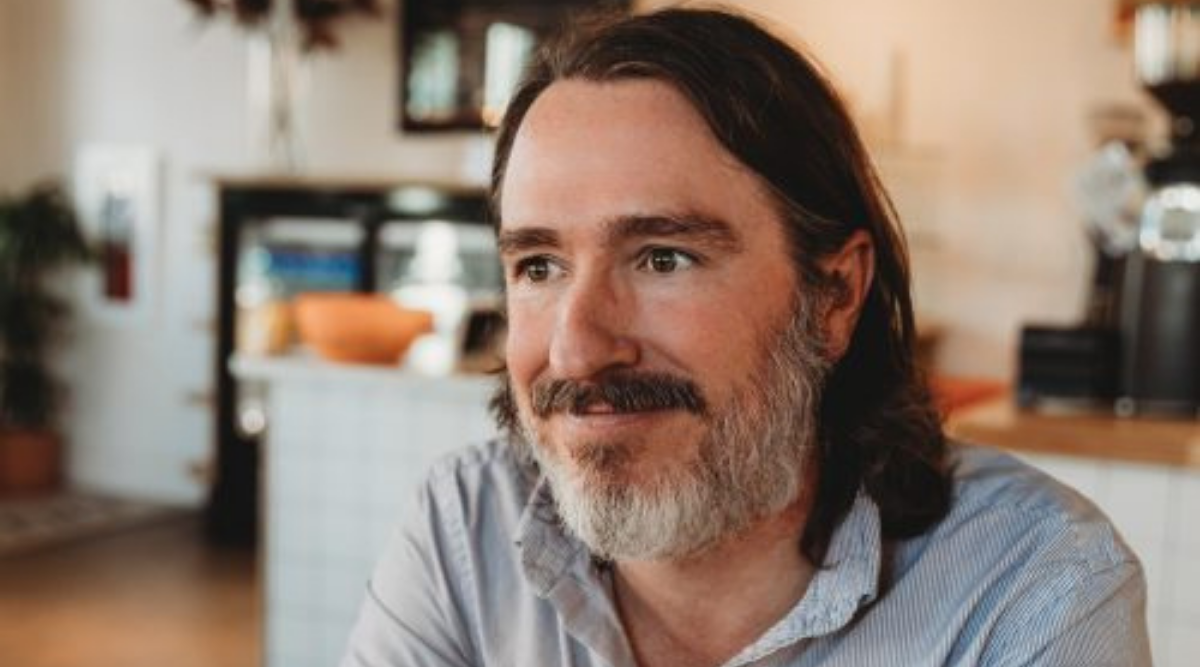
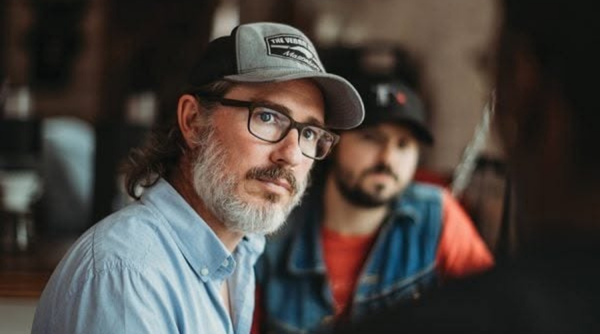
I talked recently with Wiley Cash, one of the most celebrated Southern writers of the last 20 years.
 Billy Ball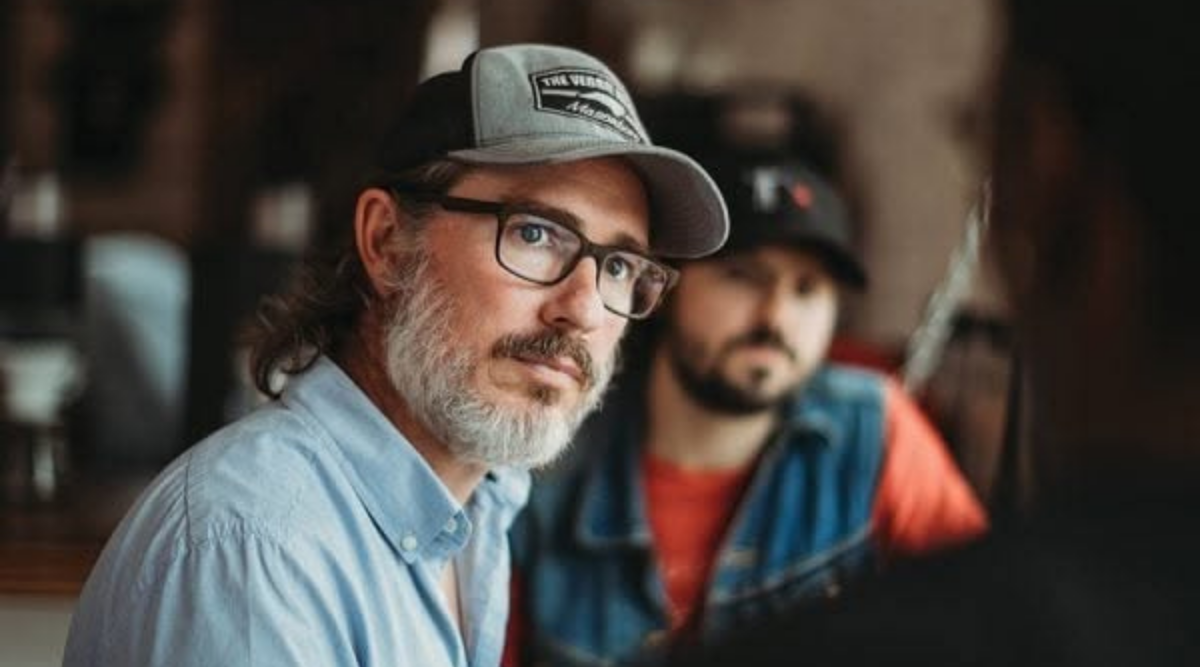
In our far-reaching conversation, we talked about choosing a political side, telling hard truths about the place where you're from, and our future in an AI world.
"I have two children, almost 12 and 10, they're gonna look back on this moment of history and they're gonna have a print archive of the stands that I took in my books. They're gonna be able to say, 'Wow, when children were being separated from their parents, when the environment was being poached by oligarchs, when people were being disenfranchised at the polls, I know exactly how my dad felt about it and I know exactly what my dad did.' And I'm super proud of that."
The following is a transcript of The Living South's interview with Cash. It has been lightly edited for clarity and context.
Support independent journalism about the South. Get a free subscription to The Living South, or sign up for a $4 monthly subscription.
The Living South:
Wiley, first off, when did you know that you wanted to be a writer? When was that moment when you were like, "This is what I wanna do"?
Wiley Cash:
I think early on. I was really fortunate to grow up in a family that encouraged literacy. You know, I'm down visiting my mom in Oak Island, and we just spent the afternoon at a new bookstore in Southport.
I just grew up in a family that really encouraged literacy, so I was an active reader from a very young age, and I grew up really doing three things in Gastonia, North Carolina:
I grew up shooting basketball in the driveway, playing in the woods, and reading. Yeah. And when it was raining and I couldn't play in the woods and I couldn't shoot basketball, I read.
"My dad was a storyteller. I learned just by observing him to kind of cherish those moments when he would tell a story. And to really interrogate why I liked it and why it made me laugh the way it did or how do you structure a narrative with suspense."
You know, this was before Nintendo, before cable really. And so I just had a lot of, a lot of reading time growing up and, you know, you can't really make a career playing in the woods. And I was not cut out for a career in basketball, to my great disappointment. By late in elementary school, I kinda knew that wasn't gonna happen.
And so writing, you know, I didn't know necessarily that it could be a career, but I knew it was something I wanted, that I enjoyed doing, 'cause I enjoyed reading. And I think, you know, if you consume an art enough, or really if you consume anything enough, you think, "Maybe I should try doing this."
And, and that's kind of how that evolved for me. I came from a line of storytellers, but not really people who saw it as a pursuit or necessarily an art, more of a pastime. Or a means of communication or maybe even maybe entertainment, but they wouldn't have consciously thought of it that way.
The Living South:
Yeah.
Wiley Cash:
But it's just what I liked. And I went to UNC Asheville. I applied to UNC Asheville 'cause they had a track in creative writing in the English major. And, um, just kinda never looked back from there.
The Living South:
Who were the storytellers in the family?
Wiley Cash:
My dad was a storyteller. He was kind of a quiet guy.
He passed in 2016. My brother, who's a comedian, Cliff Cash, gave my dad's eulogy. And he said my dad was "the redneck Buddha" 'cause he didn't want anything that he didn't have. And, so he was very quiet, very soft-spoken, but when he wanted to, he could tell really good stories and really funny jokes.
And I learned just by observing him to kind of cherish those moments when he would tell a story. And to really interrogate why I liked it and why it made me laugh the way it did or how do you structure a narrative with suspense. And then my maternal grandfather would just tell outrageous lies all the time about different things. He was from Enoree, SC.
All my family was mill people, but he grew up in the mills. He was a big storyteller, and so I just grew up around that. And then, you know, growing up around the kitchen table, as I said, my little brother's a comedian, so he was always telling stories and I was always telling stories, and just my friend group was always full of storytellers.
And so that's just kind of the environment that I was raised in.
"You know, there's the old saying, write what you know or, and then to push that a little further, write what you're willing to find out. I really know North Carolina."
The Living South:
I think that stand-up comedians are very much storytellers in their own right.
Wiley Cash:
Sure.
(My brother's) on the road right now. I think he's in Denver or he's in Colorado maybe. But you know, when he and I talk about a set he's trying to perfect, we talk about story. And when he first started, he was telling jokes, you know, jokes with setups and triggers and tags and all this stuff.
But the more comfortable he gets on stage, the more willing he is just to tell a story that he knows is gonna be funny, that he can find the humor in, that he can move along. And, you know, we were raised in the Southern Baptist Church, and that's how those sermons were set up. Not a lot of notes.
Just an open Bible and memory and and so that's kind of what we were just raised witnessing, is just getting up in front of an audience and saying, you know, what feels right, what feels right for this. And so that's kinda how I write, you know. I write just kind of what feels right.
What does the day call for? Where is the day leading me? And then, you know, clean it all up in the revisions.
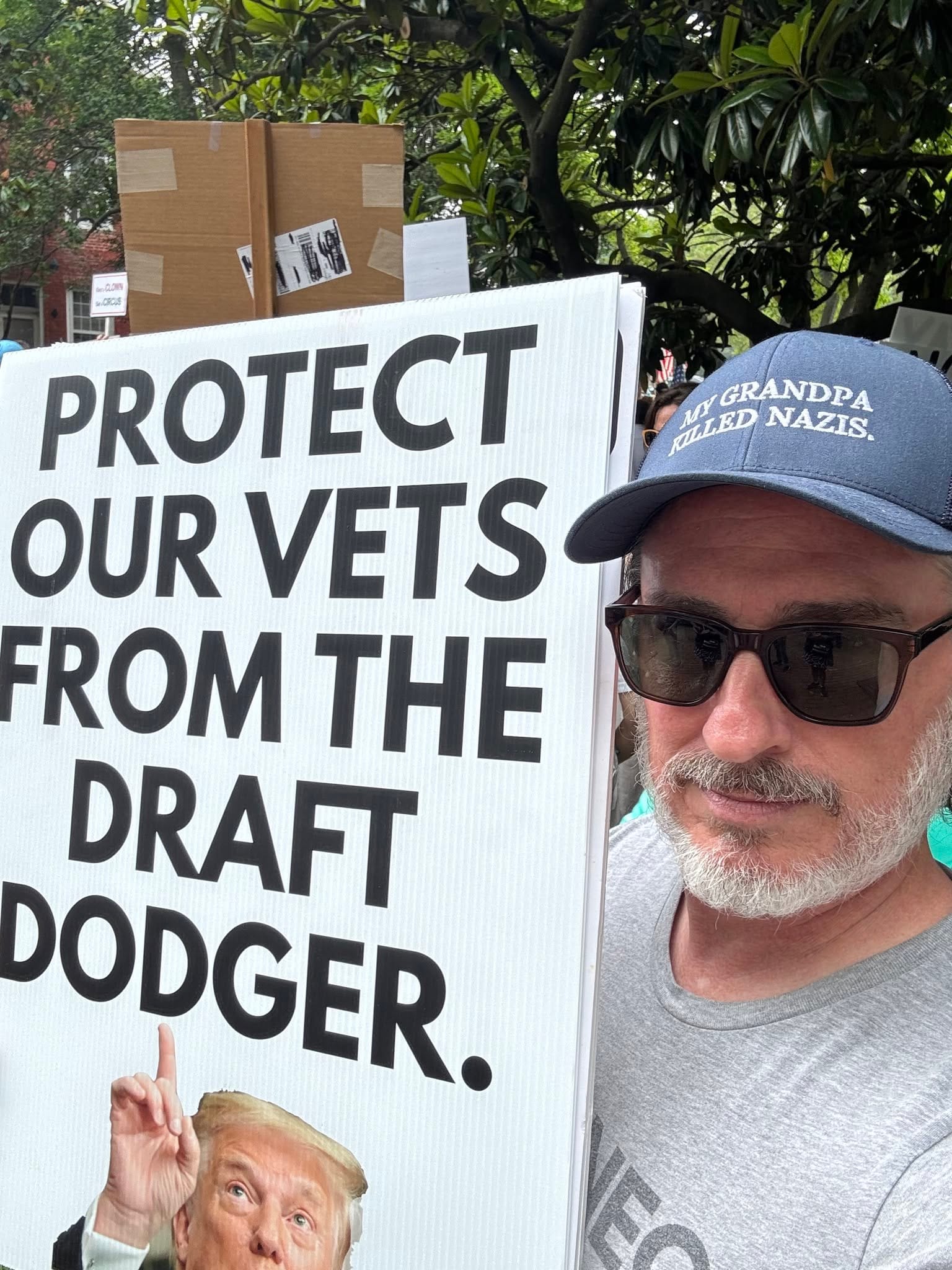
"If you wanna fire me for standing up to fascism, good luck. I'm gonna have a building named after me on my college campus if you wanna go that route."
The Living South:
All of your books have been set inside North Carolina.
Wiley Cash:
Yeah. That is true.
The Living South:
Have you ever considered setting it elsewhere or outside the South?
Wiley Cash:
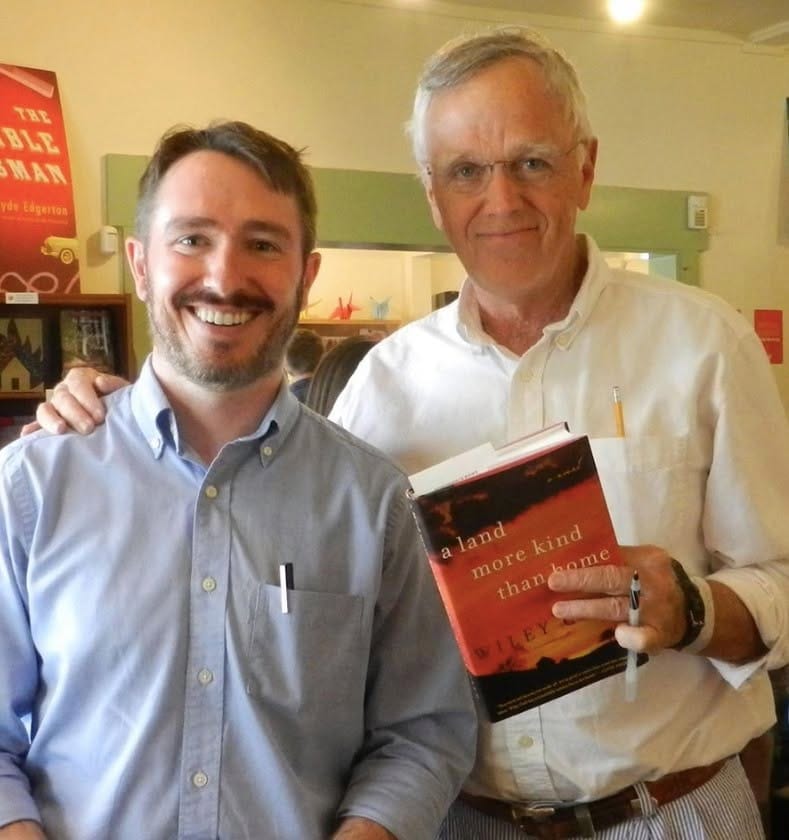
I don't know that I ever would. You know, there's the old saying, you know, write what you know or, and then to push that a little further, write what you're willing to find out. And so I really know North Carolina. I know the terrain and the geography and the history and the different areas and the towns and the accents.
And the things that I don't know I enjoy finding out. You know, I like being able to go and walk the landscape of something I'm writing about.
I lived in Louisiana for five years in graduate school, and then I lived in West Virginia for five years when I first started teaching.
I've written a little fiction set in West Virginia just 'cause it was more resonant of North Carolina than Louisiana was. Louisiana is only resonant of Louisiana. That is its own, its own place entirely, especially where I lived in Lafayette. but, um, I've tried writing stuff set in other places, namely West Virginia when I was living there, and it just doesn't feel as true to me.
And North Carolina is just the impulse, and that's just what I think I'll always do. It's just what I'm interested in.
The Living South:
I know you've been teaching in Asheville. Obviously Western North Carolina has seen its struggles in the last few years, going through a recovery process that, you know, will take years to deal with. What do you feel like the artist's responsibility is in a moment like that?
Wiley Cash:
I think the artist's responsibility is always to tell the truth, and to tell hard truths, and maybe make them palatable to a reader who is able to sit with them instead of having them delivered at a county commission meeting or by, you know, an environmental group or a historical society.
I have a novel coming out in April set here along the Cape Fear River. You know, one of the major concerns in the novel is environmental issues of flooding and overdevelopment. And, that's to some degree at the heart of the tragedy of Hurricane Helene.
You know, there's a lot of overdevelopment in Asheville. And 100 years ago or so, the French Broad did exactly what it did with Helene. And for us to think that's not going to happen again, you know, is absurd. And I love Asheville. I love all of those businesses that were affected and destroyed. I've spent unaccountable hours in Biltmore Village or in the River Arts District.
But those are vulnerable spots because we've made them vulnerable spots. You know, nature is going to reclaim those places. Just like here in Eastern North Carolina, southeastern North Carolina, the Cape Fear River is going to reclaim spaces.
And if we try to stop that from happening and we overdevelop and we fill in wetlands and we raise the water table so that we can build new developments, the places that have been here the longest are the ones that are going to flood.
They're the ones that are going to see the largest impact, and those are usually properties owned by working class people, often people of color, especially here in Southeastern North Carolina. And so that's kind of the role of the, of the artist in my opinion is to ask the reader or the listener or the viewer, "Hey, can I entertain you enough to consider this?"
You know, I think about Sir Philip Sidney "A Defense of Poetry." This sounds so bougie that I'm bringing up a Renaissance poet, but he said that the, the goal of poetry is to teach and delight. And if you can do those things concurrently...
And I'm not saying teach like be pedantic and talk down to people and i'm not saying that, but you know, we engage with serious art in the hope that it'll move us. You know, what is it moving us toward? A greater sense of ourselves, a greater sense of our world, a greater sense of one another, a greater sense of the depths within us. And so that's what I see the role of the arts is.
At the same time, it is to help. It is to create a balm for people to repair to when they need to take a break from the chaos and destruction of a major hurricane.
I think art is also political. You know, I'm really involved with politics. When I received the North Carolina Award last year and they held it in Asheville, the ceremony, and every time somebody put a camera or a microphone in front of me, I talked about Hurricane Helene and recovery and the federal government holding onto those funds.
That, that's all I wanted to talk about 'cause I had a microphone. And so, you know, I think art serves a number of purposes, but, you know, to distract, to educate, to awaken, to enlighten, to comfort. All of those things.
The Living South:
You bring up politics. I've noticed on your social media profile that you're very outspoken about politics. Has there ever been a moment when you're like, "Should I talk about politics? Will this alienate future readers?"
Wiley Cash:
No, never once. Never once in my life have I thought twice.
I might think twice about my language. You know, do I really wanna drop the "F-bomb" right here? Is that necessary, or is that a shortcut to not intellectualizing an issue?
But yeah, when people write me and say, "I will no longer read your books because of your political stance," I write back and say, "Nothing has delighted me more today than knowing I've lost a reader because I'm on the right side of history."
Like, goodbye. See you later. You know, I've had people write me and say, "I'm throwing your books in the garbage." And I'll say, "Will you make a video of you throwing my books into the garbage and send it to me?" 'Cause that would make ... I would sell so many books if you did that. You know, please do that.
The Living South:
Has anyone ever followed through on that?
Wiley Cash:
No, no, no. Oh. They're probably Russian bots. They're probably not even real.
So yeah, I've never once thought about it. I've never thought about, you know, my job as an employee of the UNC system. If you wanna fire me for standing up to fascism, good luck. I'm gonna have a building named after me on my college campus if you wanna go that route.
So I've just never backed down 'cause I know that there's going to come a time when my children ... I have two children, almost 12 and 10, they're gonna look back on this moment of history and they're gonna have, you know, a print archive of the stands that I took in my books. And I think if you read my books, you kind of know how I would feel about these things.
They're gonna have a digital archive, and they're gonna have stories, and they're gonna be able to say, "Wow, when children were being separated from their parents, when the environment was being poached by oligarchs, when people were being disenfranchised at the polls, I know exactly how my dad felt about it and I know exactly what my dad did."
And I'm super proud of that.
So if whatever reader, wherever they are, wants to send me a mean little Facebook message and say they're no longer gonna check my books out of the library, that's fine. That, that doesn't bother me one bit. It's never kept me up at night.
And if you think my social media is antagonistic, check out my brother's.
"People who believe in confidence men are people who are missing something from their lives, whether it's financial agency, whether it's faith, whether it's confidence, whether it's expertise. They're missing something, and the confidence man comes in and fills their empty bucket and makes them feel whole."
The Living South:
One of the images that really stuck with me in your books, and it comes from your first book was the snake handling early in that book, and, uh, inside the church and the people of faith.
I can't remember the exact wording you used, but it was the people who were challenging God's will by holding up these copperheads or the rattlers. And I know that book was written in 2012, but, reading that book during the Trump years and the times that we're having now, this image of people of faith holding up this lethal, this dangerous animal...
Wiley Cash:
Sure.
The Living South:
... and daring it to harm them, it just kinda, it feels like a metaphor for so many of the things that that we're looking at today. I can't imagine you were thinking about that when you wrote this book.
Wiley Cash:
No, but I was born in 1977, so I came of age in the shadow of Jerry Falwell, Jimmy Swaggart, Jim Bakker, and Tammy Faye, and whoever else you wanna lump in with them.
Now we have Creflo Dollar and whoever else, you know, these confidence men, confidence women who are bilking the faithful out of millions of dollars and selling them things that they themselves know are not real or not true or not effective. And we have a con man in the White House who's been doing this for 50 years, and he's preying on the most innocent.
And what I mean by that is people who believe in confidence men are people who are missing something from their lives, whether it's financial agency, whether it's faith, whether it's confidence, whether it's expertise. They're missing something, and the confidence man comes in and fills their empty bucket and makes them feel whole.
And beyond snake handling that's what the preacher does, Carson Chambliss does, in my novel. He appeals to these people who work hard, that have gotten the short end of the capitalist stick, and he says, "If you believe in me, if you follow me, I can make you feel powerful. You will be powerful because I am powerful, and here's how I prove it. Pick up this snake and it won't bite you."
Well, that's a pretty powerful thing to be able to prove.
And so, what Donald Trump does is he lies and he creates nonfiction out of fiction, and he says it enough and it makes them feel powerful. It makes him seem powerful. It's very incredible. And he's preying on the same people, the same people that Jim Bakker preyed on.
I mean, it's not a Venn diagram, it's a circle. It's the same people. And a lot of them are blue collar, working class, the kind of people that I grew up with. The kind of people whose lives and careers were saved by unionization, labor laws, 40-hour work week, minimum wage, Medicare, Social Security.
Their lives were saved by big government, and now the oligarchs have convinced them to turn against that because they, they need something.
Obviously, I wasn't thinking about Donald Trump. I mean, I'm sure I knew who he was when I was writing this 'cause I think "The Apprentice" was on when I was writing it, coincidentally, but could I ever foresee that he would be the president twice?
No, never in a million years. None of us could.
"I'm in constant conflict with my upbringing, with my class awareness, with my region. And it drives me to create, you know? I think it, in many ways, it's where my storytelling impulse comes from because I just swim in it every day and I'm trying to make sense of it."
The Living South:
You bring faith in with that book and your upbringing in the Southern Baptist Church.
I can relate as a kid who grew up in the rural South growing up in a church. I was in the United Methodist Church, not Southern Baptist, but I'm very well aware of the same sort of dialogues that were going on. There's a conflict to growing up and seeing that, that you disagree with some of the things you were raised on in church.
And I feel like you carry it with you everywhere you go, and I see it in your writing. How does it inform the work that you're doing?
Wiley Cash:
Well, you know, all storytelling comes from tension one way or another. It comes from oppositional forces coming into conflict with one another.
That's where story comes from. If you don't have oppositional forces coming into conflict with one another, you only have events. You have, this happens, then this happens, and this happens. You have chronological passage of time. But if you don't have conflict, you don't have a story because stories come from the uncertainty and the tension of which way something is going to go or which way something's going to move.
And so I'm in constant conflict with my upbringing, with my class awareness, with my region. And it drives me to create, you know? I think it, in many ways, it's where my storytelling impulse comes from because I just swim in it every day and I'm trying to make sense of it.
Especially in a city like Wilmington, which is such a conflicted, contested historical space. And so that's kinda what I'm thinking about all the time.
"A generation from now, AI might be the only novels people want to read. I don't know. I also never guessed Donald Trump would be president twice."
The Living South:
We're surrounded right now by talk of AI and artificial intelligence and, and people talking about it replacing us.
It has never struck me as a writer as something that AI can ever truly replace writers. But, as a creator, do you worry about AI and, our future as, uh, as novelists or storytellers?
Wiley Cash:
I don't worry about it.
I don't worry about AI so much as a threat to my livelihood, largely because I'm relatively ignorant of the power of AI, the narrative power of AI, and I don't know the extent of that technology. But I do fear AI on an existential level in terms of our environment or in our inherent desire to destroy the other.
'Cause AI has learned from us, and if we're constantly trying to destroy ourselves, it seems like something that has learned from us is going to assist us in accelerating that.
So that's more what I worry about in terms of AI. You know, 10 years down the road I might have a different answer.
My children will probably definitely have a different answer. But replacing creators, I'm not so worried about that right now. But a generation from now, AI might be the only novels people want to read. I don't know. I also never guessed Donald Trump would be president twice.
The Living South:
Yeah. It's just AI's not very good at storytelling right now.
I know writers never really retire, but when you're done what do you want them to say about your work?
Wiley Cash:
Oh, gosh. I don't know. I don't know what I want them to say. And I don't know who would say it, but I will say that what I try to do when I write is I try to get at the root of why we believe what we believe about history, about place, about faith, about one another, about social class, about the constructions of race.
That's what I'm always asking myself. That's the mystery. Like, it takes me three years to write a book, and sometimes longer. It's embarrassing. But that's the mystery that keeps me at the desk. You know, why do these people believe this? I've gotta keep going to try to get to the bottom of this.
And so I think about the state motto of North Carolina, "To be rather than to seem."
And I mentioned the Renaissance earlier. That is an anti-Renaissance idea, 'cause the Renaissance was all about seeming and not being. And North Carolina is, "To be rather than to seem." And so I'm really interested in that being, but in order to see what is, we have to get through what seems, and that's what I'm interested in moving through that space of what seems true.
About what I know of Wilmington, or what I know of Western North Carolina or what seems true about my family's history in the mills.
All of them were conservative Republicans who were buoyed by New Deal ideology, who had bread in their mouths because progressives helped them put it there.
And now they're turning against that and speaking out against unions, against progressive policies. I gotta get through that seeming to get to the root of that, of what that actually is. And so I don't know what, what critics would say about, if I passed away and had an obituary in some newspaper.
I don't know what they would say, but that is what I try to do.
The Living South:
It's a hard thing to do.
Wiley Cash:
Yeah. Yeah, it is. But it's fun. It's fun. You know, I think, being a teacher is a calling. I think being a minister of whatever faith that you believe in is a calling.
You have to wholeheartedly believe it, to give of yourself that much to do it. And I don't think that writing novels is anywhere close to being called to be a teacher or a minister but it's still something that I, that my brain compels me to investigate.
"Curiosity makes me feel optimistic. My children are very curious. They're almost 12 and, and 10, and they're, they're very curious, and they're curious about my life and my wife's life and our life before they came to exist."
The Living South:
Yeah. Yeah, I understand. And three years does not seem embarrassing (to write a book). I mean, I'm 43. I've been wanting to write a book for 43 years.
I ask everyone this as the last question. I started The Living South after I lost a child. It sort of changed the way I thought about optimism, with everything I do, fighting and scratching for a sense of optimism when things can be so dark.
What is it that's making you feel optimism right now?
Wiley Cash:
Gosh.
I think curiosity makes me feel optimistic. My children are very curious. They're almost 12 and, and 10, and they're, they're very curious, and they're curious about my life and my wife's life and our life before they came to exist.
And they're very curious about art and narrative and storytelling and people. You know, my oldest will go to a store and we'll be checking out, and my oldest will say, "What's it like to work here? Like, what's the best thing about working here?" And I'm like, that makes me feel hopeful that she would think to ask someone that.
My wife and I are opening a bookstore in Wilmington, and I feel very hopeful based on the support we've gotten. Not only from writers that I'm friends with but writers that I'm not friends with who have reached out with excitement, and readers and people in the industry, to know that, yeah, people value this third space outside of home and work where they can go and throw themselves into art and creativity and solace and exploration and curiosity.
That makes me feel very hopeful.
The Living South:
I have two other children as well, and they're the same exact way, asking questions. And I think having kids in the first place is a sign of optimism. Especially right now.
Wiley Cash:
The building's supposed to be done being renovated in, in April, and so we're hoping by May we'll be up and running. But we're having events. We're hosting John Grisham in October.
The Living South:
What's the name of the store?
Wiley Cash:
Floodplain Books.
The Living South:
Cool. Very cool. Good luck with that and with your future books. I, like a fan, will enjoy reading them.
Wiley Cash:
I like your work as well, so thank you for including me in this.
The Living South was created by journalist Billy Ball in 2024. Every week, I write about the most interesting stories, people, and thoughts in the American South. Sign up here for free. Want to reprint something from The Living South? Write me. If you like The Living South, share it with your friends. That's how we grow.